Saturday, April 26, 2008

Moving to WordPress

Dear Readers, I'm in the process of moving this blog to the WordPress platform. Please look for me at:


bughousesquare.wordpress.com


I'll leave things here as they are for a little while, but no additional posts.

Thanks to Blogger for getting me started.

Monday, February 11, 2008

How I Became a Rebel: Robert Minor


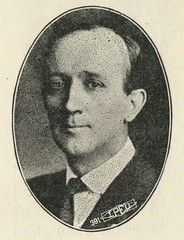
Robert Minor
Originally uploaded by Tobias Higbie
How I Became a Rebel. A Symposium. Part 2. The Labor Herald, July 1922, p. 25-26.

By Robert Minor

BY A childhood of poverty I was moulded for life membership in the working class.

When I left school at fourteen to work in a sign painter's shop my love of picture making developed to a fierce passion. It may seem incredible that this had a great deal to do with making me a rebel, but I say seriously that even the scant, pitiful art possibilities of a sign shop gave me an impression of conflict between every artistic impulse and the needs of commercial life. Few outsiders know that sign painting shops cover many really talented young workers, but my kid eyes saw and understood the conflict between young workers’ instinct for beauty and the need of the shop to drive for money.

The smallness of the wages of a sign painter’s apprentice drove me from that small Temple of Art, to start learning the carpenter's trade. Here I contracted the peculiar pride of the craftsman. Carpentering seemed to have a relation to art, and I maintain to this day that it has. My relatives got me out of this and into a "nice clean" job in a railroad office, with a chance to work up to be president of the railroad. But I couldn't stand it. I was already branded with a different iron; I quit and went off to wander on freight trains as a hobo laborer. Fifteen hours a day on a farm, at fifty cents a day, soon gave me my fill of agriculture; and I drifted into easier jobs at ten hours a day with pick and shovel. This was the serious beginning of the opening of my eyes. One day an old mule-freight teamster caught up with me on a lonely Texas road and told me I could ride if I was a working man. On the wagon he gave me a long tirade on the wrongs of the working people and the need of the working class to stick together and make a revolution. His words sunk into my memory to stay.

At camp fires in railroad construction camps and on the freight trains and in the "jungles," the conversation of wandering laborers from all quarters of the earth gave me my "cosmopolitan culture." Here I learned the indescribable beauty of that spiritual fraternity of cummunism which was poured a few years later into the songs and the deeds of the old-time I. W. W. And I learned the dreadful curse of God upon a scab.

When I returned to my native town to work at the carpenter trade and joined the United Brotherhood of Carpenters and Joiners, my rather crude working class loyalty got a slightly more definite form. Two members of the Union puzzled me by endlessly talking Socialism; of their hifalutin words I couldn't remember a thing except the constant repetition, "Carrol D. Wright to the contrary notwithstanding." But I learned more definitely what a scab is. The order came for all hands to make a stand for the Union scale of wages, which was not being paid. I was the only Union member on my building job, and I walked out on strike alone. I never got another job at the carpenter trade.

I wandered about Texas and New Mexico on freight trains, looking for work living by handouts, learning the peculiarly bitter lesson of the unemployed man sleeping on the open ground in Winter.

Unable to get work at carpentering or sign painting, I found a job as cartoonist for a small daily newspaper. This was my entrance to a trade that has taught many a man what a rotten core is inside of the social system. I didn't notice it at first, but was for some time absorbed in the rapid ambitions of the newspaper life. I got a better job on a big St. Louis newspaper. But about this time the trial of Willim D. Haywood at Boise, Idaho, came to disturb me--to awaken all of the old-time dreams--the call of my class. Simultaneously I met a Russian Jew, the first one that I had ever known. The strange talk of this man changed my understanding of what life is for. He filled me full of the fever to learn and feel. At first this merely stimulated my work and brought me some of the petty newspaper success that I had thought I wanted. Now that it came, I didn't want it. About 1908 I went into the Socialist Party. I was elected to the City Central Committee, but drifted out of the party as it began to change its character, about 1912, and began to take an interest in the Anarchist movement.

At the age of 29 I got my first opportunity to study art, and went to Paris with my saved-up wages to attend the French national art school. To my bewilderment I found that the "art schools" have not the slightest interest in art, but concern themselves solely with teaching men the way to make money, which I already knew. They have exactly· the same motives as the sign painters’ shop in Texas. This shook me off the track again. I could not associate with the foul bourgeois in the art academies. In the working class neighborhoods of Paris I learned the French language mainly by listening to agitators' speeches, and with the language I absorbed a typical Paris working-class point of view--anarcho-syndicalism. I returned to New York with no appetite for the job I had already contracted for, as a cartoonist on the New York World.

Unfortunately the first day's instructions in my new job were to begin a series of cartoons which were to be a campaign to fasten guilt for a bomb explosion (July 4, 1914) upon Alexander Berkman and Emma Goldman. It was an affair with which they had nothing to do, but which the "World" wanted to fasten upon them in one of its well-known circulation drives. For refusing to participate in this, and perhaps also for suggesting that I might publicly protest against it, I was reduced to the rank of cartoonist for the evening edition of the "World." I take space to mention this only because it is illuminating to show how a man is literally beaten along the path to one side or the other of the class struggle. I was allowed to make anti-war cartoons to my heart’s content in the Evening World for about a year. Then a strange thing happened: all of the great newspapers in America (except the Hearst press) were suddenly lined up FOR the war on the English-French side. I was ordered to begin turning my cartoons to the Allied side. I quit and went over to the New York Call, where I thought I could make revolutionary cartoons.

Later, I went to Europe as correspondent for a "liberal" newspaper syndicate. There I saw as plain as daylight the beginning of "the transforming of the Capitalist war into civil war and revolution"--the event of which Lenin's little group in Switzerland was the prophet. This prediction of course ran like a red thread through all of my writings and stuck out in my drawings. The newspaper syndicate quit printing my stuff. I came home in the steerage, amongs "my kind." I had advanced a long way--I had learned that soldiers, and not unarmed people make revolutions. It opened wide vistas thought.

The last underpinning of respect for the "democratic" social organization was knocked out of me by the Mooney case. I happened to be in California and was drawn into the organization of the Mooney defense. The Chamber of Commerce, the street car corporation, "respectable"" labor union officials, strike-breakers, policemen, petty criminals, pristitutes and "class-conscious"' petty business men, conspired to frame up and hang strike leaders. Helping to untangle this amazing conspiracy, opened up to my eyes catacombs of crime and filth upon which capitalist society is built, of the existence of which I could otherwise have had only a feeble dream. I had never before known that every Labor case in a criminal court is a stage play deliberately fixed in advance by direct bribery of witnesses and, usually, of the jury. The staggering completeness of it is almost incredible to me even now, as it will be incredible to the reader. It was like standing on a mountain while the mists blow away, revealing in the valley the terrific battle of the classes; the thundering sounds of life are shown to be artillery, and the dimly swirling silhouettes become men in the grapple of death.

That is all of "How I Became a Rebel."

But the time had already come when "being a rebel" didn't mean anything! ... George Washington was a rebel, but if brought into the society of today he would not function as such, Robespierre was a rebel, but he wouldn't have any significance now. Emma Goldman was a revolutionist in July, 1914, but today she doesn't mean anything. And I discovered when I returned from a trip to Russia in 1918 that "being a rebel" just generally, without taking a definite place in the Communist revolution, didn't mean any more than being a Methodist. I noticed while I was in a military prison that the officers disputed very seriously as to whether I was an Anarchist or a Bolshevik, and upon deciding that I was only an Anarchist they treated me more as a moderately respectable man. This very much humiliated me, and set me to wondering.

So, "How I Became a Rebel" doesn't mean anything, and the story's no good. How I became a specified kind of a rebel against a specific thing and for a specific thing in a specific way--that is the only tale that means anything.

And that's a different story.

###

Friday, February 08, 2008

How I Became a Rebel: William Z. Foster


William Z. Foster
Originally uploaded by Tobias Higbie
How I Became a Rebel. A Symposium. Part 2. The Labor Herald, July 1922, p. 24-25.

By Wm. Z. Foster

FOR me to become a rebel was an easy, natural course. My father was an Irishman and an ardent patriot. He was driven from Ireland in the latter ‘60’s, because he was implicated in a plot to overthrow all the English garrisons in the country. Upon its exposure he had to flee post haste to escape jail. In later years, as his family grew up in the United States, he fed us on hatred for the oppressor England. It was the intellectual meat and drink of our early lives. I was raised with the burning ambition of one day taking an active part in the liberation of Ireland. As I grew older and began to notice what was going on about me I was quick to realize that everything was not as it should be. The wrongs of the workers made a ready appeal to me. It seemed as natural to hate capitalistic tyranny in the United States as English Tyranny in Ireland. From my earliest recollection I was militantly partial to striking workers. Particularly was I impressed by the many strikes in the nearby anthracite coal fields--I was raised in Philadelphia. To my boyish conception the coal operators were inhuman monsters, and after all, I was not far wrong. The free silver agitation in the the ‘90’s attracted me greatly.

But I never got by bearings until one Saturday night in the summer of 1900, when I was 19 years old. Walking along South street I ran into a Socialist soap boxer at the corner of Broad street. He was the first Socialist I had ever heard speak and I listened amazed. The whole thing was a revelation. Whatever prejudice I had been taught to have against Socialism melted away like snow before a summer sun. The thing was clear at last. My rebellious spirit saw the broad way to its goal. Though I said nothing to the men conducting the meeting--I have often wondered since who they were--I left a convinced Socialist. After that the rest was easy. I plunged head over heels into revolutionary literature, reading everything indiscriminately and gradually swinging from right to left in my conception. I was "made" that Saturday night in Philadelphia. That's how I became a rebel.

###

Thursday, February 07, 2008

How I Became a Rebel: James Maurer


James Maurer
Originally uploaded by Tobias Higbie
How I Became a Rebel. A Symposium. Part 2. The Labor Herald, July 1922, p. 24.

By James H. Maurer

I AM asked to tell how I became a rebel. This, I fear, is not any easy question to answer.

I am decendant of old, conservative Pennsylvania stock, was born in a shanty during the stormiest period of the Civil War, reared among very poor and superstitious people, left fatherless at the age of seven. I became a news boy first and a factory worker before my tenth birthday. I was a machinists’ apprentice at fifteen and a member of the Knights of Labor at sixteen. Less than thirteen months of my life were spent in school. What education I did secure, I got, not on acocunt of the State, but in spite of it.

Handicapped, of course, on account of being illiterate, yet a greater handicap was the misfortune of having a step-father who knew less than I did and who never tired of gloating about his superior wisdom. The one outstanding asset of my life was my dear, little mother, to whom not one of her four sons ever spoke an angry or unkind word. She was lovable, gentle and yet, when roused, knew no fear. She was ever ready to share her last crumb with the unfortunate, fight an evil or defend the under dog.

This may answer the question as to how I became a rebel or perhaps I should say why Mother’s four sons turned rebels before any of them turned twenty-one. It was not from what I read, because I was active in radical circles long before I could read. It came from what I lived.

Before I was eighteen years of age, I joined hands with the "Green-Backers," at twenty, I read, "Progress and Poverty" and, became a "Single-Taxer." Later I joined the "Populists Party" but, through it all remained active in the Organized Labor Movement; studying and reading, of course, added fuel to the fire. In my search for good pamphlets and books, I came across the "Communist Manifesto." This, of course, helped weld still more closely my inherent rebel spirit. Twenty-four years ago, I joined the Socialist Labor Party and, four years later, the Socialist Party where I have remained ever since. So, the question as to just how I became a rebel is still unanswered. I guess dear, little Mother could have answered the question better than I.

###

Wednesday, February 06, 2008

How I Became a Rebel: Elizabeth Gurley Flynn


Elizabeth Gurley Flynn
Originally uploaded by Tobias Higbie
How I Became a Rebel. A Symposium. Part 2. The Labor Herald, July 1922, pp. 23-24.

By Elizabeth Gurley Flynn

It is difficult to say how, when or where our rebellious spirits were born! Possibly we are but fortunate inheritors of a rich legacy. Undoubtedly countless generations of wild Irish ancestors who fought and fled into the hills and died for Irish freedom, contributed much to mine. One great grandfather lay all night in the ditch near his little house, watching for a light in the window which meant his wife came safely through childbirth. Another went to join the French when they landed at Calala Bay and never returned. My grandfather came to Maine to escape hanging. But life in the land of the free was not easy in those days for the Irish. They were foreigners to the Yankees and had to fight their way to economic and political equality. It is strange that the same historical background has not produced more rebels of Irish blood in this country! Many of the second and third generation are policemen and politicians, causing a race that should symbolize freedom to be hated and feared as tools of tyranny. But America seems to have a similar disintegrating effect on the second generation of other races, as well.

Sympathy plays a large part in molding the child mind. I remember little episodes which left indelible impressions. A woman who had lost all the fingers of one hand in an unguarded machine went by our house daily. I could not understand why this poor woman must still work. I saw an old man weeping as he was put in the little town lock-up at Adams, Mass., for vagrancy. What a torment of questions stirred my mind then! Nor will I ever forget my childish horror when a girl’s hair was torn off by the belting in a mill across the street from our school and the mill stopped for only a few minutes. Imperceptibly my thought processes began to question poverty which was obviously the explanation of these tragedies.

My father had worked his way through college, studying civil engineering. But he had been burdened by his mother’s large family and had commenced late, a real handicap in competition with younger men. The result was that although he is exceptionally talented, it was not easy to secure continuous employment and the actual pinch of poverty was brought home to us more than once. This visualized the problem as no amount of abstract reading could have done.

So I was in a receptive state of mind for radical thought when I joined a school debating society. We grappled with the problem of capital and labor, woman suffrage, the trusts, etc. During the big anthracite strike of 1902 one of our favorite topics was "Shall the Nation Own the Coal Mines ?" A strike of the elevated roads in N. Y. brought the questions of municipal ownership of transit systems before us. I began to see that message of hope, that comes to all of us, "Socialization of industry."

I heard Tom Lewis at a Socialist street meeting, and many other excellent speakers at the old Harlem Socialist Club. Sometimes when I get low-spirited about the value of speeches, I recall how inspired and thrilled I was by them. Finally I thought I too could speak. I was not yet sixteen and I chose the ambitious topic "Woman and Socialism." While I still am intensely interested in how to reach women, I fear I know far less today than I did then. I went into the East Side. I met the garment workers, then in the throes of great struggles and learned of the idealism and fighting spirit of the Russians and Jews. I plunged into street speaking and loved it intensely. I was "converting the masses!" How the fresh idealism and enthusiasm of youth carries us along. But it is a stream that refreshes and revivifies our movement. Intolerant and uncompromising, it is rebuffed and chilled by older "practical" people! The creation of a sympathetic understanding and appreciation of those who must tread this stormy path would save much precious force for our movement.

One night I was arrested on 39th St. and Broadway, by an apolegetic policeman, bailed out by a saloon keeper and given some fatherly advice by the Irish magistrate on the futility of preaching Socialism to Broadway. Of course this was a dreadful shock at high school and eventually resulted in my enlisting actively in the labor movement.

It must have been about this time that I heard Debs and DeLeon speak together on "Industrial Unionism." It was immediately after the launching of the I. W. W. and it certainly worked a turning point for me. I really began to place my feet on the ground and tread a definite path. Out of the first flush of youthful emotion, I passed into a second stage-based on a firm conviction which I still hold to, that the union movement is the real and lasting labor movement. I saw a new society built by the organized workers-not along geographical but industrial lines. Regardless of differences of opinions on forms, methods, and tactics; the fact remains that it is the movement of power, it is at grips with capitalism in the strategic place, the point of production. It speaks the worker's language. I have no faith elsewhere than in the industrial organization of the workers, and I have unlimited faith in the promise of life and liberty it holds out for the future and the eventual ability of the workers to put it across. So I remain like my Irish ancestors, a rebel!

###

How I Became a Rebel, Part 2

This post begins the second set of autobiographical sketches, including Elizabeth G. Flynn, James Maurer, William Z. Foster, and Robert Minor

How I Became a Rebel. A Symposium. Part 2. The Labor Herald, July 1922, pp. 23-26.

Editors’ note;--A fundamental part of the general revolutionary program is to make rebels; to develop men and women who have definitely broken with capitalism and who are looking forward to the establishment of a Workers’ Society. But how can such rebels be made? To throw some light on this all-important query, THE LABOR HERALD has asked prominent figures in all branches of the radical movement, to explain briefly just how, why, and under what circumstances, they became convinced that capitalism had to be done away with. This installment completes the Symposium.

###

Sunday, February 03, 2008

How I Became a Rebel: Lincoln Steffens

"How I Became a Rebel. A Symposium. Part 1," The Labor Herald, June 1922, p. 24-25.

By Lincoln Steffens


MY approach to the social problem was political. I was a reporter, a muckraker; and I had been a college man; American, German, French universities. My working theory, therefore, was unscientific. The social problem was to me a political problem; and the political problem was moral. Bad men made our good government bad and good men would make it good. Honestly I believed that.

Honestly I "exposed" seventeen cities. They were all corrupt. They were all corrupted in the same way, to the same end. Regardless of men. The sources of corruption in all seventeen cities were the same. This suggested that general, not merely personal forces were at work, and that the problems of all our cities were all one problem and that the solution must be one.

At that time many city people thought that, while the cities were "bad," the state governments were "good" or "better." I took the trail to the states, and I "did" eleven of them. They were all corrupt. They were all corrupted in exactly the same way. They were all corrupted just as the cities were corrupted. And, as in the cities, the sources of the corruption in all my eleven states were the same.

But the national government: that at least was "good." I wrote a series of articles in Washington, giving particulars which in general showed that the Federal Government was not only corrupt like the cities and the states; it was corrupted in the same way, by the same interests.

In the long course of this investigation I met all sorts of men in politics: good and bad, crooks and reformers. It made no essential difference. The best and ablest reformers I watched at work were either beaten or corrupted. The process of corruption went on over or under or through them. Evidently the problem was not a moral problem and the solution was not-goodness. Bad men did not cause the evil; good men could not do much good.

Still thinking in terms of good and evil, I asked what did the evil, and to find the answer I passed by men and started for the roots. That's what "radical" means: a digger for the roots of socalled evil. What are they? Not who, but what? I had to start with, the generalization that the sources of our political corruption in all branches of the American Government were the same. They were all one. What was that one Thing?

Business. I wrote it "Big Business;" railroads, public service corporations, etc. I did not see till later that back of big business was little business. All I saw was that big business corrupted politics and government. But that was a long step for me to take. My theory was that it was the other way around; that business was "good," politics was "bad." I thought what many men still think; that is was politics that held-up, blackmailed and corrupted business: To find that it was business that held down, bribed and corrupted politics, was progress.

I dropped politics for awhile and studied business. I reported the exposure of the Life Insurance companies. There were three of them. We began with one. That proved to be corrupt: as corrupt as a city; worse; and the sources of the corruption were the same as in a city, a state, the national government. And then, when the investigation extended to the other life insurance companies, the second and third big companies were found to be all corrupted in the same way as the first. Some of us then howled for a look into the lesser companies and they were just like the big ones. Some natural law was at work.

How about other businesses? Abiding my time, I got a chance to look deep into three railroads: The Pennsylvania, the New Haven and the Southern Pacific. All corrupt; all corrupted alike and--all like the insurance companies and the government.

One thing at work everywhere!

Yes, everywhere. Wherever I looked I saw it. It was business. It was successful business men who contributed to our political parties, gave money to our universities, supported our churches, bought up newspapers. It was business that corrupted all these things and, worst of all, "got" Labor and Business too. The controllers and grafters in business control and graft upon all life. Here and abroad. For I went to foreign countries and, though I never wrote much about them, I did study and so can say that in the four greatest countries in Europe, the corruption is just like that of the United States, in politics, business, journalism, colleges, churches, organized Labor. What did it mean? It meant a lot of things to me, but suffice it for the moment to say that, to me, it meant that the social problem is not political and not moral; it is a business problem. Therefore it is an economic problem, one and the same all over the world; and that the solution is likewise economic.

###

How I Became a Rebel: Upton Sinclair

"How I Became a Rebel. A Symposium. Part 1," The Labor Herald, June 1922, p. 24.

By Upton Sinclair


WHEN I was young I was taught ideals. I was taught them very earnestly, and I took them seriously. As I grew up I tried to apply them, and I discovered that the world did not mean for them to be applied. Neither the ideals of Christianity, which I learned, nor those of the poets whom I was taught to love, had any place in the practical world of affairs. Naturally I wanted to know why this was so, and I kept on inquiring and speculating about it. So inevitably I came to realize that our whole industrial and financial system is founded upon a set of ideas diametrically opposed to those of Christianity and of humanity.

Our political system was supposed to be better: that is to say, co-operation and the rights of humanity was supposed to prevail there. But our politics were corrupt, and I discovered that it was big business which did the corrupting. When I realized this, and spoke out about it, I found that the upholders of the present system invariably either ridiculed me, or became indignant with me. So gradually I became a rebel, and I am kept in the mood of rebellion by everything I learn about the present world; by every newspaper I read and every morning's mail which comes to my desk.

###

William Ross Knudsen: How I Became a Rebel

"How I Became a Rebel. A Symposium. Part 1." The Labor Herald, June 1922, pp. 23-24.

By Wm. Ross Knudsen


FRESH out of High School, with a bourgeois psychology and fame as a roller-skater, well dressed and with a beautiful crimson necktie as a headlight, I put on my best efforts and strolled into San Diego, California.

There was a free speech fight on, but of it I knew nothing. Suddenly a policeman's hand shook my shoulder, and when, insulted, I resisted, I was slammed in the jaw; completely subdued, I was brought before the police sergeant, absolutely in the dark as to what was the cause.

"Here's another Red, Sergeant."

Completely bewildered, I looked about in a frightened manner. Those ahead of me were questioned regarding Socialism, Unionism, I. W. W., etc. I thought I was in a bughouse.

"Where are you from?" "Who are you?" "Are you an I. W. W.?"

I tried to answer questions that I did not understand. "What are you wearing that red necktie for?" I finally convinced them that I was a poor "boob" and gained my freedom.

Once outside I began to puzzle my mind. Socialism? Unionism? Red neckties? and while still trying to connect them together, I suddenly came upon a radical hall. In I went and was soon buying all the pamphlets and literature in sight. As I turned to go with my arms full, a sudden commotion broke in upon my thoughts. A raid upon the hall was being made, and again I faced the sergeant.

This time I failed to explain, and into the tank I went. Here I found men talking, arguing, and singing. Next thing I knew, the fire hose was turned into the tank. I tried hard to away from the water; cracked in the back with the full force of the stream from the hose, I fell a moment later in some feet of water.

The brutal actions of the police, the confinement with these rebels, and my mental reactions to all this, caused me to have a great interest in learning what it was all about. I investigated. I read all the literature I could get. Reading and thinking produced the result--a Red.

###

Saturday, February 02, 2008

Eugene V. Debs: How I Became a Rebel

"How I Became a Rebel, A Symposium, Part 1," The Labor Herald, June 1922, p. 23.

By Eugene V. Debs

THERE was never a time in my life when I was not with the weak and poor and against the rich and strong who oppressed them. At fourteen I was a wage-worker in a railroad shop. My pay was fifty cents for a ten hour day. I had my lesson in wage-slavery early in life and never forgot it. In later years many offers came to desert the ranks and climb to the "top" but they were all refused. It suited me better to remain a slave than to become a master. Upon that point I never had a doubt. At sixteen I was firing an engine and at nineteen, in 1875, I joined the Brotherhod of Locomotive Firemen as a charter member of the Lodge instituted at Terre Haute. In 1892 I resigned the office I held in the Brotherhood to organize the American Railway Union. The craft no longer satisfied me. The great body of railway employes were not organized at all and the American Railway Union, based upon the industrial principle, embraced them all. The railway managers recognized the menace of the new industrial power of their united employes in the Pullman strike in 1894 and combined to destroy it. The federal government, subservient to the railroads, gave willing support. The strike had been won clean and the victory was complete. Not a wheel moved. The roads were paralyzed and the managers helpless.
What followed? Injunctions, arrests, and federal troops with shotted guns and orders to kill. Next? The brotherhood officials in alliance with the railway officials and orders issued to the craft unions to fill the places of the strikers. Next? The office of the American Railway Union raided without warrant of law by government thugs, the clerks driven out, the records carted away, and the officials thrown into jail in accordance with the law and order program of the railway corporations. My blood boiled as I sat with my associates in the foul, rat-infested jail at Chicago. A six-months' sentence followed, jury trial having been denied. In jail there was time for sober reflection. Revolutionary literature came through the bars. My blood cooled and my head cleared. The class struggle came into bold relief and I saw clear as the noonday sun how and why the government came to do the bidding of the railroads abjectly as a trained monkey obeys his master.

In the darkness of a prison cell I saw the light, and when I walked forth I was a socialist and from that day to this I have been the relentless and uncompromising foe of capitalism and wage-slavery.

###

How I Became a Rebel, Part 1

This post begins a series of autobiographical sketches from prominent American labor radicals of the World War I era. They appeared in The Labor Herald, published by the Trade Union Educational League, during the summer of 1922. Part 1 includes Eugene V. Debs, William Ross Knudsen, Upton Sinclair, and Lincoln Steffens. Part 2 includes Elizabeth Gurley Flynn, James Maurer, William Z. Foster, and Robert Minor.

"How I Became a Rebel. A Symposium. Part 1.," The Labor Herald, June 1922, pp. 23-26.

Editors’ note;--A fundamental part of the general revolutionary program is to make rebels; to develop men and women who have definitely broken with capitalism and who are looking forward to the establishment of a Workers’ Society. But how can such rebels be made? To throw some light on this all-important query, THE LABOR HERALD has asked prominent figures in all branches of the radical movement, to explain briefly just how, why, and under what circumstances, they became convinced that capitalism had to be done away with. The symposium will be completed in our July number.

###

Wednesday, January 30, 2008

Unionizing the Brain Worker

Unionizing the Brain Worker

David J. Saposs, "Unionizing the Brain Worker: Actors, Writers, and Librarians Line Up!" Labor Age, December 1922, pp. 1-2.

To call any group of workers "brain workers" does not really mean very much. Everyone who works uses hands and brain. The executive and the poet have their hand-tools, pencils, pens and the like. Even such a simple-looking job as ditch digging, on the other hand, is an art of its own. Anyone who has taken a hand at being a "muck stick artist"--digging foundations, for example--can tell you that.

But "brain worker" is a word which has come to be commonly used--and no better one has yet appeared. It covers those two sets of workers who do not strain their muscles in doing their jobs. They are the so-called "white-collar slaves"--clerks and other office employes--and the members of professions--doctors, lawyers, engineers.

It has been an old, old charge that "brain workers" of any type would never organize. They would not consider themselves as brothers of the manual workers. It is the latter who have blazed the way in trade unionism. But the charge against the "brain workers" is today only half true. The actors' unions have shown that the job canbe done. The Actors' Equity Association is strongly organized--perhaps, one of the strongest unions in its own field, of those belonging to the Amerian Federation of Labor. It links together star and non-star. It enforces its Equity Shop Contract. It has defeated the open shop campaign with the greatest ease. Since its victory of three years ago, it has given the lie year by year, step by step, in all its efforts, to that old charge.

It is not the only group in the theatre which has done well. On the Jewish stage the players are 100 per cent organized. Among the Polish and Bohemian speaking group the union is also strong. The musicians have an equally good record. Their effective organization goes back farther than that of the actors, to at least two decades ago. They have been able to raise the standards of their profession, by requiring an entrance examination for the candidate for union membership. They have been strong enough in many places to require that the proprietor of a moving picture show or theatre employ so many musicians for ever so many seats in his house as the union may require. In the battle against the "open shoppers," they have on the whole held their ground well. The membership of the American Federation of Musicians reached 75,000 this year--the highest in its career.

During the War, the clerks, too, heeded the call of unionism. The organized railway and steamship clerks--who belong to the same international union as the manual working freight handlers--increased greatly in number. Their organization is one of the most active and progressive among the rail unions. Their fellow workers, the railway mailers, have a strong little union of their won. Then, there is the important National Federation of Federal Employees, with its membership of 25,000. It extends all through the federal service, with strong locals in the Library of Congress and the Bureau of Standards. In its ranks are men with doctors' titles, specialists of all sorts, types of professional men who would not be thought of as connected in any way with a trade union or the American Federation of Labor. In their battles for changes in the civil service laws and for better salaries, however, these men have found the labor movement a powerful Big Brother.

Why, even the bank clerks of the Jewish east side are union members! In 1920 they went on strike against the United States Bank. The contest was an uneven one. The bank lost. Sad to relate, this movement has not spread to the hard-worked and low-paid bank clerks of non-Jewish institutions. They are much in the same class as the "retail clerks"--salesmen and salesladies in retail stores and shops. The International Protective Association of Retail Clerks has 16,000 members--but they are mainly to be found in mining communities and other like places where union cooperative stores flourish. Department store strikes have been rare in American labor history. Perhaps the largest was the strike in St. Louis about five years ago, when 4,000 men and girls came out on the street. But that was due to unusual conditions. It followed a quickly won street-car strike. It had the negative support at least of one of the large newspapers--boycotted for a time by the retail merchants.

In the garment trades, however, both the Amalgamated Clothing Workers and the International Ladies' Garment Workers' Union have been able to make headway among the salesforces in the retail shops. They have brought these salesmen and saleswomen into their own organizations, which are of course industrial unions, covering the whole of their respective industries. The success that they have had in unionizing these people will beyond doubt in time encourage other strong unions of manual workers to do likewise with clerks and salespeople in their industries.

No band of workers has fought harder or more courageously than the teachers' unions, particularly in New York City. Their story is given in this issue of the LABOR AGE.

Previous issues have told of the help which technical men--lawyers, engineers and researchers--are giving the Unions. Most of these groups of workers have defied unionization.

yet, when we recall that even the Jewish rabbis in Chicago have formed their own economic organizations and that the "shochets"--with rabbinical functions--are organized in the United Hebrew Trades in that city, the day when technicians of all kinds may be widely organized in the trade unions may not be so far off. The nurses and other attendants of public institutions are also organized. This is the case in Chicago, where several local unions exist. It must be also remembered that the highest trade scientists of the federal service are members of the Federal Employees' Union, and that the highest trained artists of the actors are unionized.

When the time comes the line of cleavage between those who work for a living and those who do not work will be easily seen. The united "intellectual" and manual workers will readily see that they do not need the stockholder and the banker. The two groups of workers can run industry by conducting it themselves. Unionization of the "brain workers," therefore, means much to the manual workers--just as the "brain worker" cannot make much progress toward effective organization without the help of his "hand-working" brothers. Unionization of the "brain workers" means final freedom for both, through the establishment of Service in Industry.

###

Blogging Historical Documents

This blog has been silent of late. Just too busy with my real job, family, etc. Now I'm going to try a little experiment.

I am working on a project about working class intellectuals during the early 20th century. They were just the type of people who would have hung out in Chicago's Bughouse Square. I'm going to use this blog to post some of the more interesting primary sources I am discovering. I may, in separate posts, offer commentary. But the documents will be direct transcriptions. You can find some related images on my Flickr site in the Historical Documents Collection. Hope you enjoy them.